

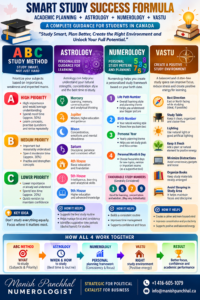
| Priority | Canadian approach | Your study action |
|---|---|---|
| 🅰️ A — High Priority | High exam value + weak area OR frequently tested/application-heavy | 50% of study time |
| 🅱️ B — Medium Priority | Important but reasonably understood | 30% of study time |
| 🅲 C — Lower Priority | Low exam impact or already well understood | 20% of study time |
The Canadian version should have 4 filters
1. Exam Weight / Competency
What is most important for the actual Canadian examination?
2. Your Knowledge Level
- Strong → less time
- Average → moderate time
- Weak → more time
3. Application Ability
Can you actually apply the rule/concept to a Canadian case, rather than simply remember it?
4. Time Efficiency
If one topic takes 5 hours to gain a small number of marks, while another can produce significant marks with 1–2 hours of work, prioritize the second one.
Example — Canadian CPA-style preparation
Suppose a candidate is studying:
- Financial Reporting — weak + important → 🅰️
- Management Accounting — average → 🅱️
- Tax — strong → 🅱️/🅲
- Audit & Assurance — weak + important → 🅰️
- Small low-frequency topic already mastered → 🅲
The objective is not to study everything equally.
A = Master it
B = Strengthen it
C = Maintain it
And one important Canadian adaptation: case/application practice should be part of the A-level work, because professional Canadian examinations are not simply memory tests. CPA Canada notes that candidates need to identify knowledge gaps and apply competencies in practice cases. CPA Canada
⭐ Simple formula
ABC = Importance × Your Weakness × Application
That is the version I would recommend for Canadian professional students.
If by “Canadian version” you specifically mean the Canadian CPA exam, I can make a CPA Canada ABC Method poster in English with A/B/C subjects, study-time percentages, revision cycle and case-writing strategy.